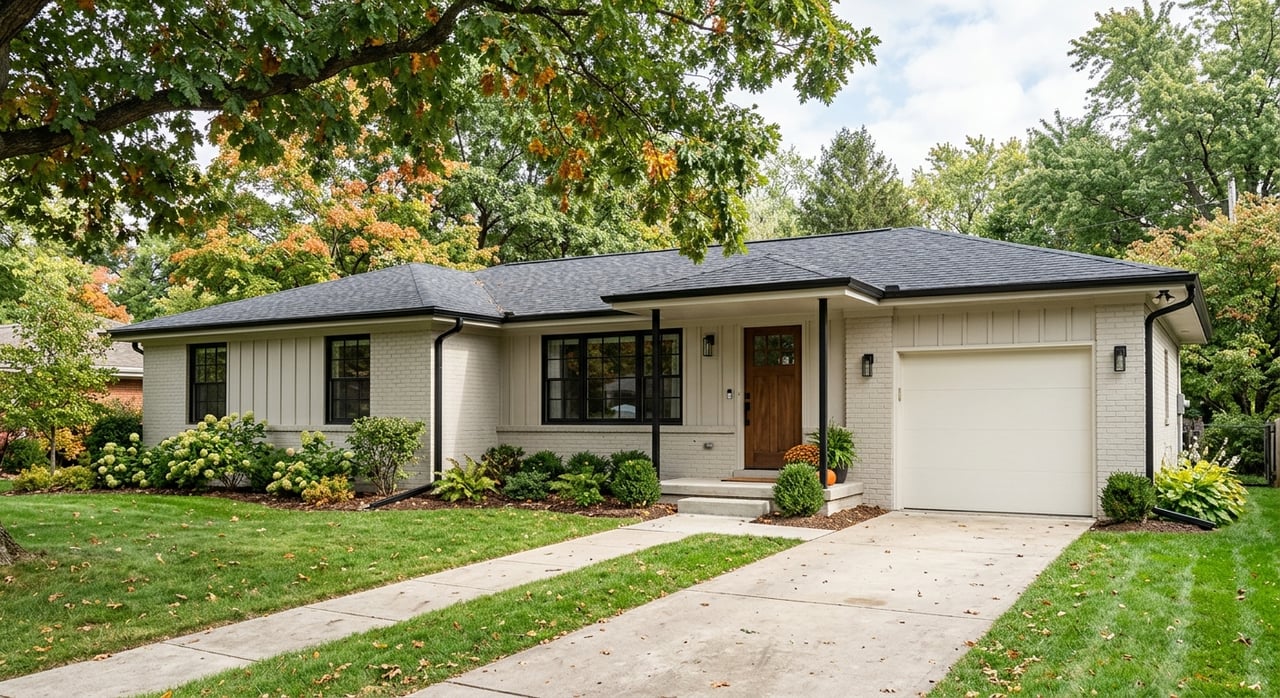
Is Roseville A Good Place For Your First Home?
June 25, 2026
June 25, 2026
Wondering whether Roseville is a smart place to buy your first home? That is a fair question, especially if you want a close-in suburb with good daily convenience but also need your budget to work in real life. The good news is that Roseville can be a strong first-home option if you understand its price range, housing mix, and tradeoffs before you start touring. Let’s dive in.
Roseville is a first-ring suburb just north of St. Paul, and it offers a mix that many first-time buyers like: strong shopping options, park access, and practical commuting routes. It sits along I-35W and Highway 36, which helps connect you to both downtowns and other parts of the Twin Cities.
It is also an established city, not a brand-new growth area. Much of the housing stock dates to the 1940s and 1950s, and the city is largely built out, so most newer housing comes through redevelopment rather than large new subdivisions.
That matters because Roseville often appeals to buyers who want location and convenience more than a brand-new house. If that sounds like you, the city may be worth a serious look.
Roseville is not a low-cost market, but it is also not one-size-fits-all. As of May 2026, Zillow reported a typical home value of $383,985, Redfin showed a median sale price around $389,767, and Realtor.com listed a median listing price of $365,000.
The city’s housing needs assessment gives even better context for first-time buyers. It shows that ownership options are concentrated between $200,000 and $400,000, which lines up with what current market snapshots suggest.
For many first-time buyers, the key takeaway is simple: the core buying range in Roseville is usually about $250,000 to $400,000. Below that, your choices are more likely to be manufactured homes, very modest homes, or older apartment-style ownership options.
Roseville’s median household income is $86,930, according to Census QuickFacts. The city’s affordability table suggests that households earning roughly $50,000 to $100,000 often line up with purchase-price bands of $202,000 to $303,000 and $303,000 to $404,000.
In plain English, that means a typical buyer shopping in Roseville may be aiming somewhere in the middle of the market rather than at the very bottom. It also means your monthly payment matters just as much as the sticker price.
Census QuickFacts reports median monthly owner costs with a mortgage of $1,954 in Roseville. That is a helpful reminder that this is better viewed as a moderate-cost suburb, not a bargain market.
One of the biggest mistakes first-time buyers can make is treating Roseville like every area is priced the same. It is not. Recent listing snapshots showed neighborhood-level variation from about $145,000 in Fairview Southwest to about $382,000 in South Owasso, with Lake Josephine around $290,000.
That spread is important because it shows how much your options can change depending on where and what you buy. A buyer who says, “I want to buy in Roseville,” still needs to narrow that down by property type, condition, and budget.
This is one reason a focused search matters here. Two homes with similar square footage can offer very different maintenance needs, update levels, and long-term value.
Roseville offers a broad mix of housing. The city includes single-family homes, townhomes, manufactured homes, market-rate apartments, senior housing, and affordable housing.
The housing stock also leans heavily toward attached and multifamily living compared with some suburbs. The city’s assessment says 43% of all housing units are multifamily, which helps explain why first-time buyers may find more variety here than in places dominated by detached homes.
If you want your first purchase to be lower maintenance, Roseville can still work. But the likely path is often a townhome rather than a condo, since the city’s report says condo development has limited viability outside downtown Minneapolis.
A lot of Roseville’s appeal comes from being established and close in. A lot of its complexity comes from that too. Since much of the housing was built in the mid-20th century, condition can vary widely from one property to the next.
That can create opportunity for buyers who are comfortable with an older home and realistic about upkeep. It can also create risk if you stretch your budget on the purchase price and leave no room for repairs or updates.
The city itself offers home-improvement loans up to $40,000 plus deferred repair loans, which tells you something important about the local housing landscape. Aging homes are a real part of the market here, and maintenance planning should be part of your buying strategy.
If your top priority is predictable upkeep, a townhome may be one of the more practical entry points in Roseville. That can be especially helpful if you want ownership without taking on every repair decision that comes with an older detached home.
This does not mean a townhome is automatically the better buy for everyone. It means Roseville gives first-time buyers a chance to compare tradeoffs more clearly: space versus maintenance, location versus updates, and monthly payment versus future repair costs.
For some buyers, an older single-family home still makes perfect sense. For others, a townhome offers a better balance of affordability, convenience, and peace of mind.
Buying your first home is not only about the house. It is also about how your everyday routine will feel once you move in. Roseville tends to score well on convenience.
The city profile says Roseville is less than a 10-minute commute to either downtown Minneapolis or St. Paul, while Census QuickFacts reports a mean travel time to work of 20.7 minutes. That gives you both a location advantage and a more realistic citywide benchmark.
Roseville also functions as a job center, not just a bedroom community. The city says businesses and industries in Roseville employ more than 35,000 people, which can be useful if you want work, errands, and home life to stay relatively close together.
Transit options are stronger here than in many suburbs. According to the city’s Metro Transit page, routes 223, 225, and 227 operate in Roseville, and the A Line provides express service from Rosedale Center to 46th Station in Minneapolis. Metro micro also offers shared rides that connect to the A Line at Rosedale Transit Center.
For errands and shopping, Roseville is especially convenient. The city profile says Rosedale Center plus six other shopping centers make Roseville one of the leading retail centers in the upper Midwest, with the mall attracting 14 million visitors annually.
If green space matters to you, Roseville also has strong park access. The city lists 33 parks, 679 acres of parkland, and 67 miles of trails, with Central Park alone covering 225 acres.
For many first-time buyers, the best first home is not just the one you can buy today. It is the one that still makes sense in five or 10 years. Roseville has several signs of long-term stability, but the answer depends a lot on the specific property.
The city’s housing assessment says home values have risen since the mid-2010s, homeownership rates have been rising, and the city is projected to add 511 households over the next decade. Current market snapshots support that trend, with Zillow showing values up 3.4% year over year and Redfin showing sale prices up 3.2% year over year in late spring 2026.
That suggests underlying demand is still present. Homes also tend to move fairly quickly, with listings going pending in roughly 14 to 17 days based on current market snapshots.
If you are thinking about Roseville, the safest approach is usually not chasing the absolute cheapest listing or assuming every updated finish means a smart buy. In a market with older homes and varied submarkets, condition and fit matter a lot.
A practical first-home strategy here often looks like this:
For many buyers, a well-inspected townhome or a solid mid-century house with realistic repair expectations may be the strongest match.
Yes, Roseville can be a very good place for your first home if you want suburban convenience, strong park and shopping access, and workable commuting options near both Minneapolis and St. Paul. It is especially worth considering if your target budget is roughly $300,000 to $400,000, or if you are open to an older home or lower-maintenance ownership option.
It may be a tougher fit if you need the lowest possible entry price and still want a brand-new detached house. Because Roseville is built out and much of the housing is older, buyers usually need to balance budget, condition, and property type more carefully here than in some farther-out suburbs.
The upside is that if you buy thoughtfully, Roseville can offer the kind of everyday convenience and long-term livability that makes a first home feel like a smart step, not just a starter purchase.
If you want help comparing Roseville homes, sorting through older property condition issues, or figuring out whether a townhome or single-family home fits your long-term plans, Adam Duckwall can help you make a calm, informed decision.
Stay up to date on the latest real estate trends.

Bring your outdoor space to life — and increase your home’s value — with smart renovations designed for St. Paul living.
Your guide to inspired, high-end living in St. Paul’s evolving luxury market.
His expertise in real estate ensures that you receive informed and objective guidance. Contact Adam to learn more about how he can assist you in meeting your real estate needs.